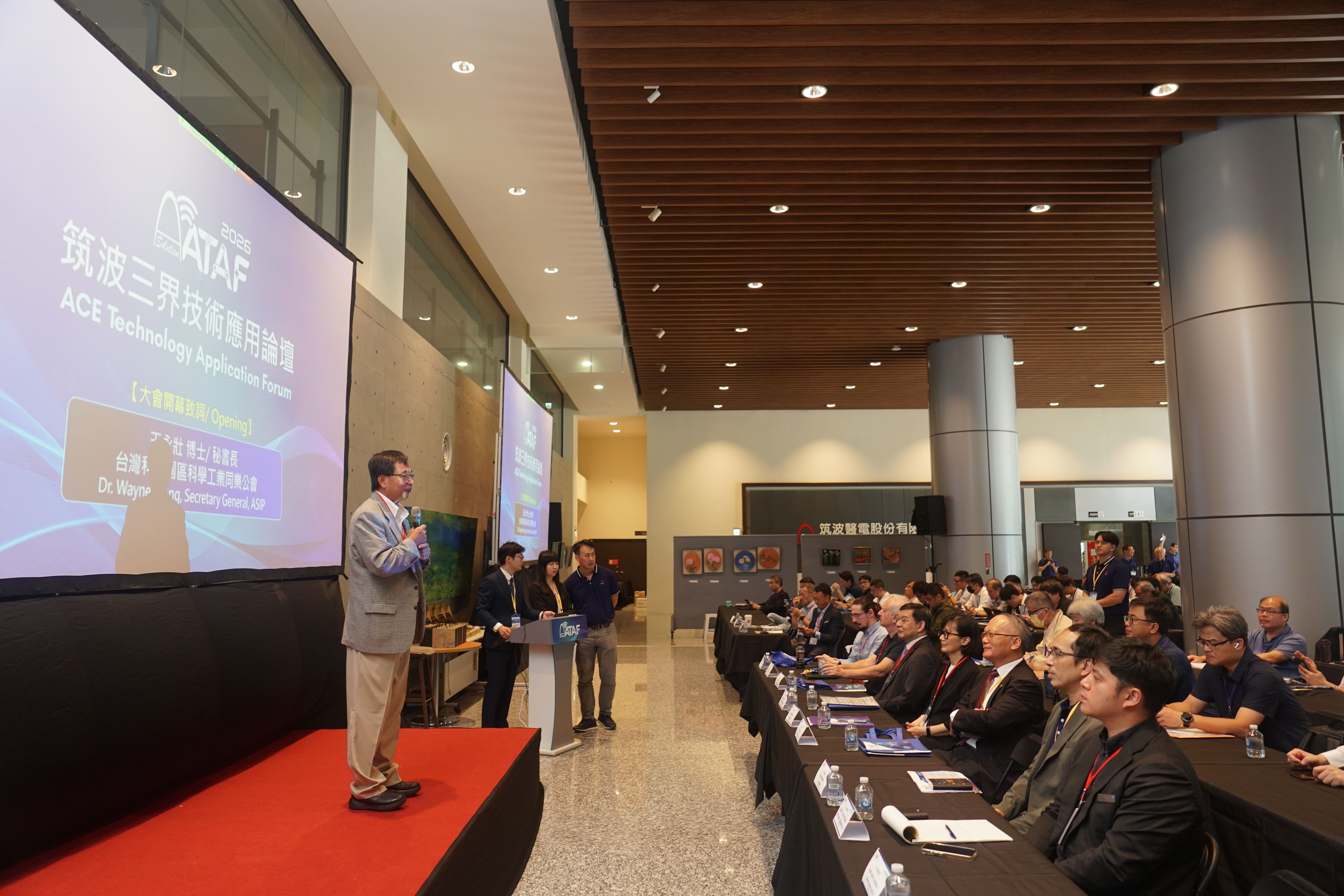
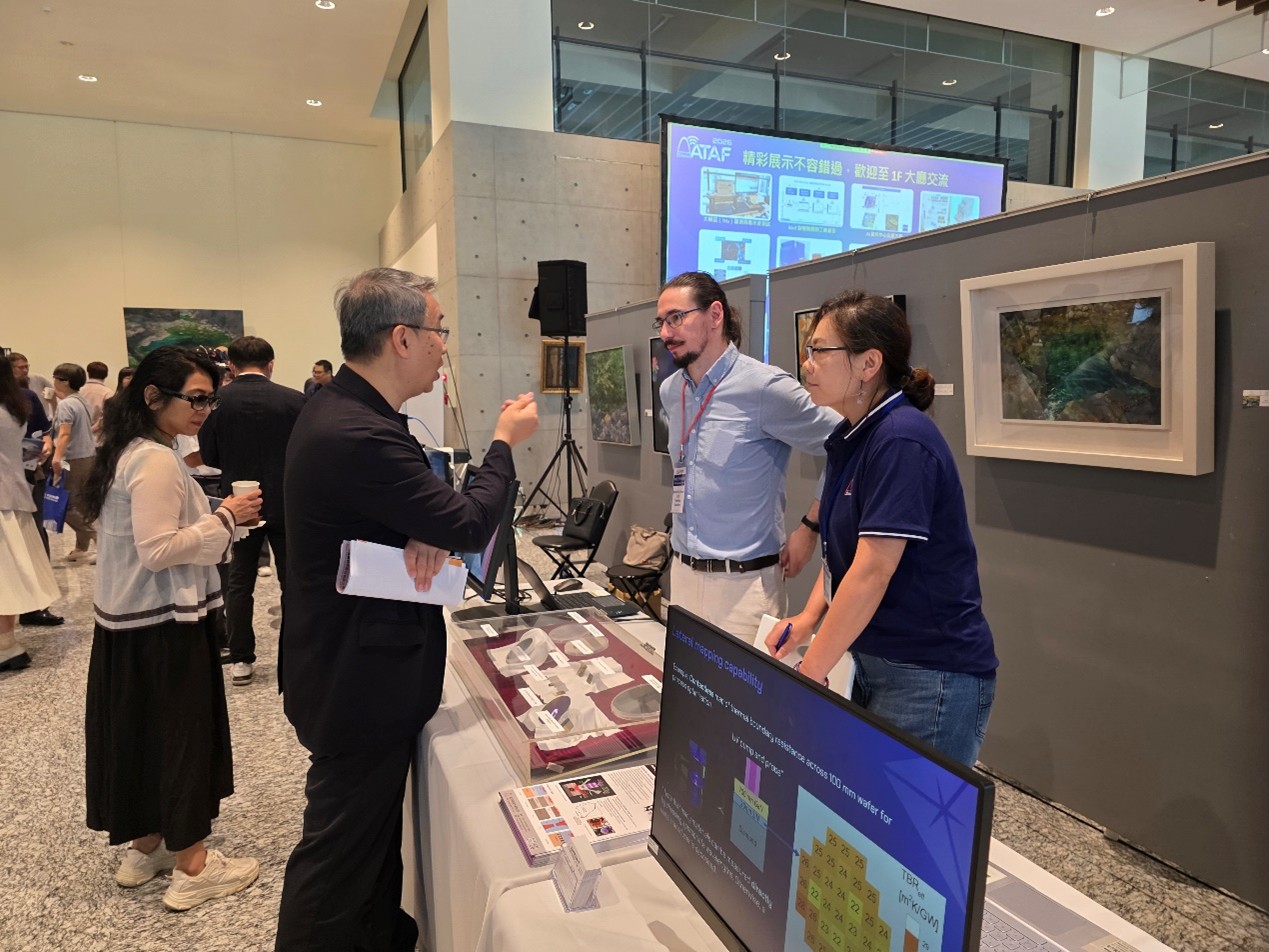
The world is entering a pivotal phase of the AI computing revolution, where technological convergence and cross-industry integration are becoming critical drivers of business competitiveness. On August 12, ACE Group hosted the inaugural 2026 ACE Technology Application Forum (ATAF), drawing on its extensive expertise in wireless communications, advanced semiconductor testing, and smart healthcare.
Themed around the development of an integrated technology ecosystem spanning three key domains, ATAF brought together technology leaders, industry experts, clinical professionals, and academic researchers to explore emerging technologies and real-world applications across communications, semiconductors, and healthcare. The forum attracted more than 300 attendees and created opportunities for decision-makers across industries to exchange insights, identify emerging trends, and explore cross-sector collaboration.
Highlight 1: High-Frequency Communications and Robotics — Enabling Next-Generation Connectivity and Physical AI
The first session explored emerging wireless technologies and their role in the next generation of industrial connectivity. As manufacturers face labor shortages and growing demands for productivity and automation, autonomous mobile robots (AMRs) are increasingly being deployed in high-tech manufacturing environments for applications such as obstacle avoidance, material handling, and automated loading and unloading.
The session also examined how robotics simulation and digital technologies are accelerating the development and deployment of Physical AI, enabling robots to better perceive, interact with, and adapt to real-world environments.
At the same time, growing demand for space technology and high-frequency communications is driving innovation in advanced wireless technologies. Developments in terahertz (THz), millimeter-wave, and low Earth orbit (LEO) satellite communications are opening new possibilities for next-generation connectivity and high-frequency applications.
Highlight 2: Semiconductors, Advanced Materials and Silicon Photonics — Enabling the Next Era of Computing
As the rapid growth of AI computing drives increasingly demanding requirements for data transmission and thermal management, advanced semiconductor technologies are becoming critical to overcoming performance bottlenecks. The second session focused on the development and practical implementation of advanced technologies across semiconductor manufacturing, packaging, and testing.
Industry experts discussed advanced packaging technologies for high-performance computing (HPC), including yield optimization and defect inspection, as well as emerging approaches for semiconductor manufacturing and process development.
The session also highlighted the growing role of silicon photonics in high-performance data communication. With its advantages in high bandwidth and low latency, silicon photonics is emerging as a key technology for optical interconnects and data center architectures, supporting scale-up, scale-out, and scale-across computing configurations. These developments are expected to play an increasingly important role in enabling the performance and scalability required by next-generation AI systems.
Highlight 3: Smart Healthcare and AI Applications — Transforming Clinical Practice Through Technology
The third session focused on the practical implementation of AI and digital technologies in healthcare, highlighting how innovative technologies can address real-world clinical needs and improve patient care.
Topics included AI-assisted diagnosis for otologic diseases and patient safety solutions in anesthesiology. Smart monitoring technologies can continuously track physiological conditions throughout surgical procedures and provide real-time insights to help predict changes in patient status and reduce procedural risks.The session also explored the rapid development of 5G-enabled remote surgery and robotic systems, demonstrating the potential of advanced connectivity to expand access to specialized medical expertise.
Other discussions addressed clinical applications in women’s health, including fertility and endometrial health, as well as advances in precision medicine for pancreatic cancer. The forum also examined data interoperability for urgent care services, including the UCC 2.0 model, and how real-time exchange of electronic medical records and laboratory data between healthcare institutions can support seamless referrals and improve continuity of care through standards such as FHIR (Fast Healthcare Interoperability Resources). ACE Group stated that the future of technology lies in breaking down traditional boundaries between industries. ATAF goes beyond a technology forum by serving as a platform for convergence across communications, semiconductors, and healthcare. By connecting global technology leaders and industry pioneers, ACE aims to identify emerging opportunities, accelerate technology adoption, and expand new possibilities in the era of AI.